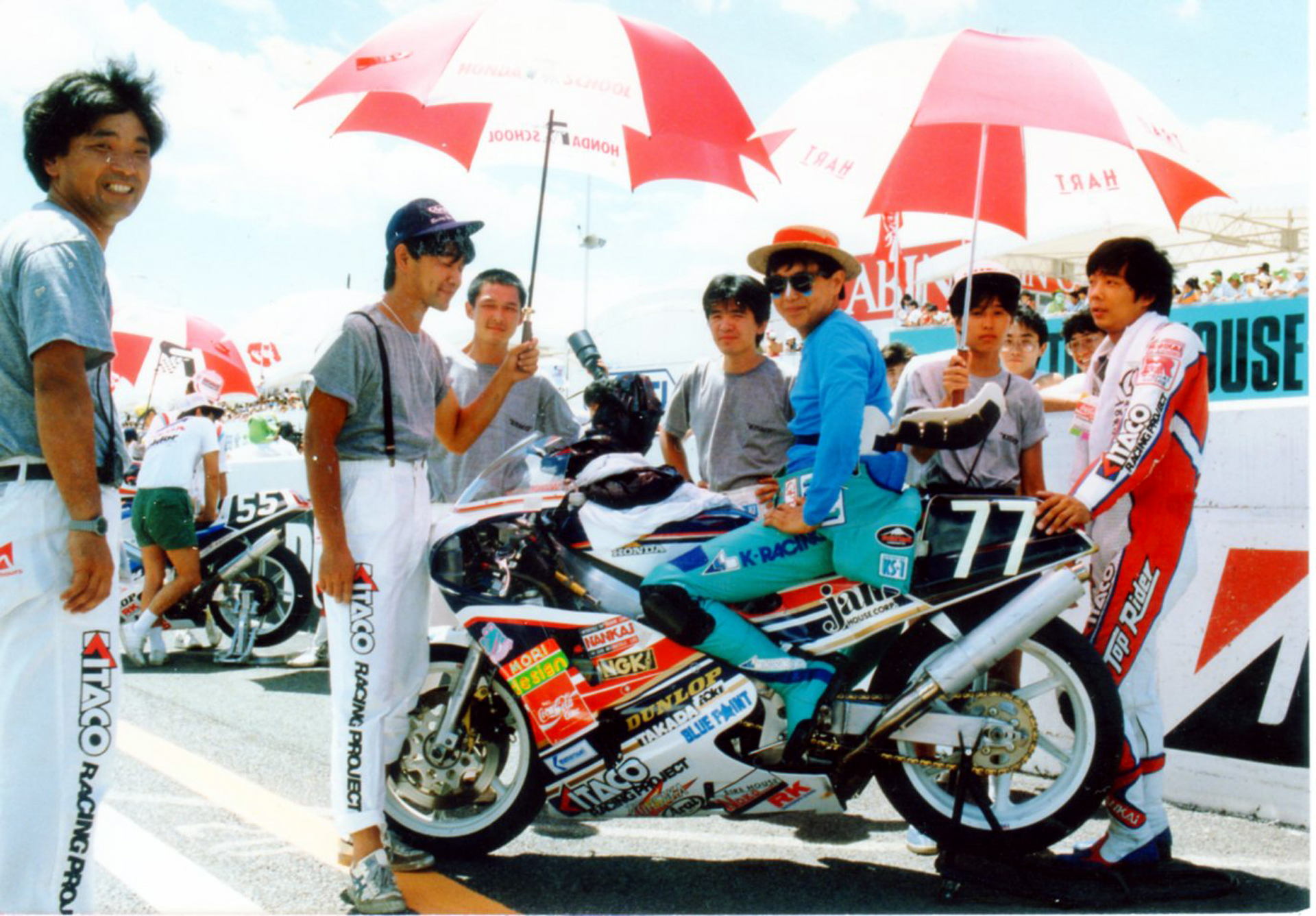
写真は1987年7月26日 日曜日
鈴鹿8時間耐久レース
決勝スタート30分前
マシーンに股がるのは
第1ライダー 故大島正選手
第2ライダーは辰巳保夫選手
マシンはHONDA RVF750F...?
The photo was taken on Sunday, July 26, 1987, 30 minutes before the start
of the Suzuka 8 Hours final race. The first rider, the late Tadashi Oshima,
was riding the machine, and the second rider was Yasuo Tatsumi. The machine
was a HONDA RVF750F...?
A foto foi tirada no domingo, 26 de julho de 1987, 30 minutos antes do
início da corrida final das 8 Horas de Suzuka. O primeiro piloto, o falecido
Tadashi Oshima, pilotava a moto, e o segundo era Yasuo Tatsumi. A moto
era uma HONDA RVF750F...?
No.1 VF750F エンジンの秘密とマシーンの秘密...
No.1 VF750F Engine secrets and machine secrets...
Segredos do motor e da máquina VF750F nº 1...
●2023/07/05 水曜日 送信メール
辰巳さんが、耐久で乗った大島のエンジンは、 僕がアルバイトして稼いだお金で
①ベリカッパーのシートリングに交換
②シリンダヘッドを0.6mm面削をして圧縮比をアップ たぶん、11.0→12.5くらいに上がってます
③カムギャトレインの下側のギャ歯車のせらし歯車(バックラッシュをゼロにしている)を撤去してフリクションを無くしてます。
上記が、大島仕様です
●2023/07/05 Wednesday Sent email The Oshima engine that Tatsumi rode in
the endurance race was made with the money I earned from my part-time job.
1. Replaced the seat ring with a Vericopper. 2. Surfaced the cylinder head
by 0.6mm to increase the compression ratio, probably raising it from 11.0
to around 12.5. 3. Removed the gear (which reduces backlash to zero) on
the gear on the bottom of the cam gear train to eliminate friction. The
above is the Oshima specification.
● 05/07/2023 Quarta-feira E-mail enviado O motor Oshima que Tatsumi usou
na corrida de resistência foi feito com o dinheiro que ganhei no meu trabalho
de meio período. 1. Substituí o anel de sede por um Vericopper. 2. Retifiquei
a superfície do cabeçote em 0,6 mm para aumentar a taxa de compressão,
provavelmente elevando-ade 11,0 para cerca de 12,5. 3. Removi a engrenagem (que reduz a folga a
zero) na engrenagem inferior do trem de engrenagens do comando de válvulas
para eliminar o atrito. A descrição acima corresponde às especificações
da Oshima.
①のバルブシートをベリカッパー(銅に2%のベリリュームを添加した銅合金)に変えると、まず、バルブのサージングが極端に少なくなります バルブは高回転になるとシートリングに閉まるときにジャンピング現象を起こします
そして、熱伝導率が良いのでバルブが冷えます。
特に、インレットバルブが熱くなっていると混合気が熱膨張を起こして混合気がスムーズにシリンダーに入らなくなります。
①+②+③=👍 ずーと、思っていた疑問が解けたかな😶 またね、お元気で🌼
If you change the valve seat (1) to Bericopper (a copper alloy with 2%
beryllium added), first of all, valve surging will be drastically reduced.
At high revolutions, the valve will jump when it closes on the seat ring.
Also, because of its good thermal conductivity, the valve will cool down.
In particular, if the inlet valve is hot, the mixture will expand thermally
and will not be able to enter the cylinder smoothly. ①+②+③=👍 I think I've
solved the question I've been wondering about for a long time😶 Until next
time, take care🌼
Se você trocar a sede da válvula (1) por Bericopper (uma liga de cobre
com 2% de berílio adicionado), em primeiro lugar, a oscilação da válvula
será drasticamente reduzida. Em altas rotações, a válvula salta ao fechar
sobre o anel da sede. Além disso, devido à sua boa condutividade térmica,
a válvula irá resfriar. Em particular, se a válvula de admissão estiver
quente, a mistura se expandirá termicamente e não conseguirá entrar no
cilindro suavemente. ①+②+③=👍 Acho que resolvi a questão que me intrigava
há muito tempo😶 Até a próxima, se cuidem🌼
キャブレターのニードルは キットパーツに無い ワークスのニードルを使ってました�。
秘密なんだけど3速のギヤがショートになっている。
ヤマモトレーシングの岩橋選手が3速で離されて特に鈴鹿の東コースは3速を良く使うからセッティング教えてと...
ニードルは教えましたがギャの事は言いませんでした...
The carburetor needle was a factory needle that wasn't included in the
kit. It's a secret, but the third gear was shorted. Yamamoto Racing's Iwahashi
was getting pulled away in third gear, and he often uses third gear, especially
on the Suzuka East Course, so he asked me for advice on the settings...I
told him about the needle, but didn't mention the gear.
A agulha do carburador era uma agulha de fábrica que não estava incluída
no kit. É um segredo, mas a terceira marcha estava encurtada. O Iwahashi,
da Yamamoto Racing, estava sendo ultrapassado em terceira marcha, e ele
costuma usar a terceira marcha, especialmente no circuito leste de Suzuka,
então ele me pediu conselhos sobre os ajustes...
Eu falei sobre a agulha, mas não mencionei a marcha.
おまけ�
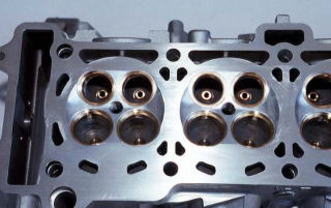
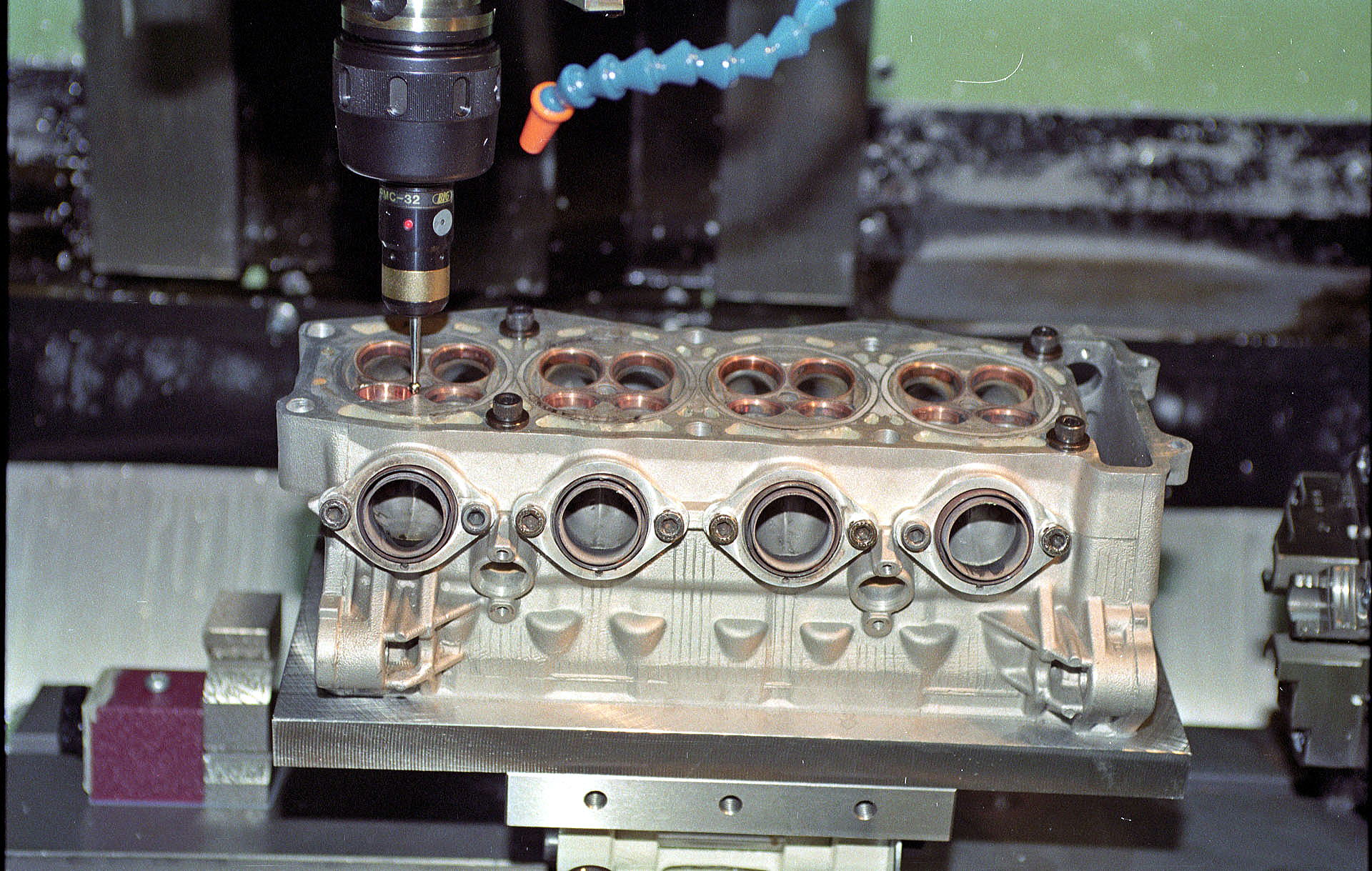
写真はZX7 、阪神ライディングスクールのエンジン
1996年西日本サーキット全日本選手権でワークス押さえて優勝したシリンダヘッドを加工しているところです。
The photo shows the ZX7, an engine from Hanshin Riding School, in the process
of machining the cylinder head that won the 1996 West Japan Circuit All
Japan Championship, beating out the works team.
A foto mostra a ZX7, um motor da Escola de Motociclismo Hanshin, em processo
de usinagem do cabeçote que lhe rendeu o Campeonato Japonês do Circuito
Oeste de 1996, superando a equipe de fábrica.
エンジンチューニングにおいて 大事なのは 混合気がシリンダーに入ったら、逃がさないことです。
逃げる所は、シリンダーとピストンの間と IN 、EXバルブとバルブシートの間 ノーマルのバルブシートはコストの関係から焼結合金(パウダー状の合金を熱をかけて固めた物) バルブガイドも同じです。
The most important thing in engine tuning is to prevent the air-fuel mixture
from escaping once it has entered the cylinder. The places where it can
escape are between the cylinder and piston, and between the IN and EX valves
and the valve seats. Stock valve seats are made of sintered alloy (a powdered
alloy that has been heated and solidified) for cost reasons, and the same
goes for valve guides.
O mais importante na preparação de motores é evitar que a mistura ar-combustível
escape após entrar no cilindro. Os locais por onde ela pode escapar são
entre o cilindro e o pistão, e entre as válvulas de admissão e escape e
as sedes das válvulas. As sedes de válvulas originais são feitas de liga
sinterizada (uma liga em pó que foi aquecida e solidificada) por razões
de custo, e o mesmo se aplica às guias de válvulas.
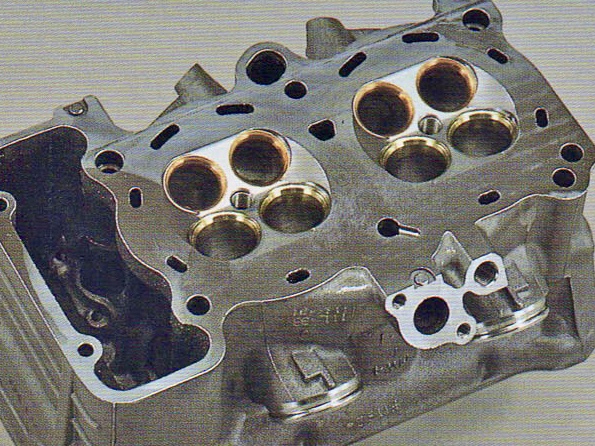
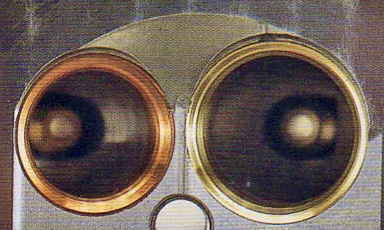
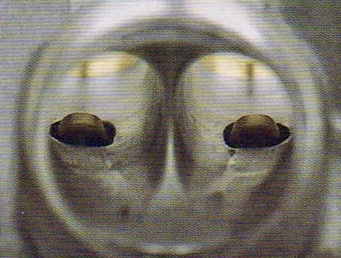
バルブシートをベリカッパーに交換しているのって ワークスしかいない(HRCでは僕の処を紹介してました)と思います。
まず、これを1番に考えること。 案外簡単そうで難しい バルブシート交換は 4輪のチューナで 柿本レーシングが堺市にあり
社長がまだ、会社を作る前から作業を見て覚えました。 ( 実際は、凄く大変です)
自分でやったのは、BEETレーシングにいた頃。
シート交換がなかなか出来ず、何日も何日も徹夜しました。
その頃使っていた材料は バルブガイドがPBB(リン青銅) インレットバルブシートが ABB ( アルミ青銅) エキゾーストバルブシートが FCD
50( ダックタイル鋳鉄)
また、ベリカッパーは知っていても入手先がわからないので使っていません。
I think only works teams replace their valve seats with VeriCopper (HRC
introduced my company). This is the first thing to consider. It seems simple
but is actually quite difficult. Valve seat replacement is done by a four-wheel
tuner called Kakimoto Racing in Sakai City. The president learned the process
by watching them do it even before he started the company. (In reality,
it's very difficult.) The last time I did it myself was when I was at BEET
Racing. I couldn't get the seat replacement to work, and I stayed up all
night for days and days. The materials I used at the time were: Valve guides
- PBB (phosphor bronze), Inlet valve seats - ABB (aluminum bronze), Exhaust
valve seats - FCD 50 (duck tile cast iron). Also, even though I know about
VeriCopper, I don't use it because I don't know where to get it.
Acho que apenas as equipes de fábrica substituem as sedes de válvulas por
VeriCopper (a HRC me apresentou a isso). Este é o primeiro ponto a considerar.
Parece simples, mas na verdade é bem difícil. A substituição das sedes
de válvulas é feita por uma preparadora de carros chamada Kakimoto Racing,
na cidade de Sakai. O presidente aprendeu o processo observando-os fazerem,
mesmo antes de fundar a empresa. (Na realidade, é muito difícil.) A última
vez que fiz isso foi quando estava na BEET Racing. Não consegui fazer a
substituição das sedes funcionar e passei várias noites em claro. Os materiais
que usei na época foram: guias de válvulas - PBB (bronze fosforoso), sedes
de válvulas de admissão - ABB (bronze de alumínio), sedes de válvulas de
escape - FCD 50 (ferro fundido). Além disso, embora eu conheça o VeriCopper,
não o utilizo porque não sei onde encontrá-lo.
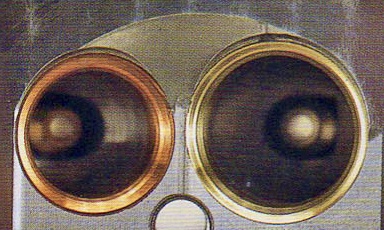
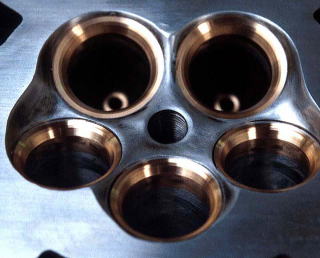
写真は、RC45 インレットがアルミ青銅 エキゾーストがベリカッパー ( BeCu ) 最終的にホンダF1が使用しているバルブシート用材料がブラッシュウイルマン・ジャパンより買うことができます。
The photo shows an RC45, the inlet is made of aluminum bronze and the exhaust
is made of VeriCopper (BeCu).Finally, the valve seat material used by Honda
F1 can be purchased from Brush Wilman Japan.
A foto mostra uma RC45, com a admissão feita de bronze de alumínio e o
escape de VeriCopper (BeCu). Por fim, o material da sede da válvula usado
pela Honda na Fórmula 1 pode ser adquirido na Brush Wilman Japan.
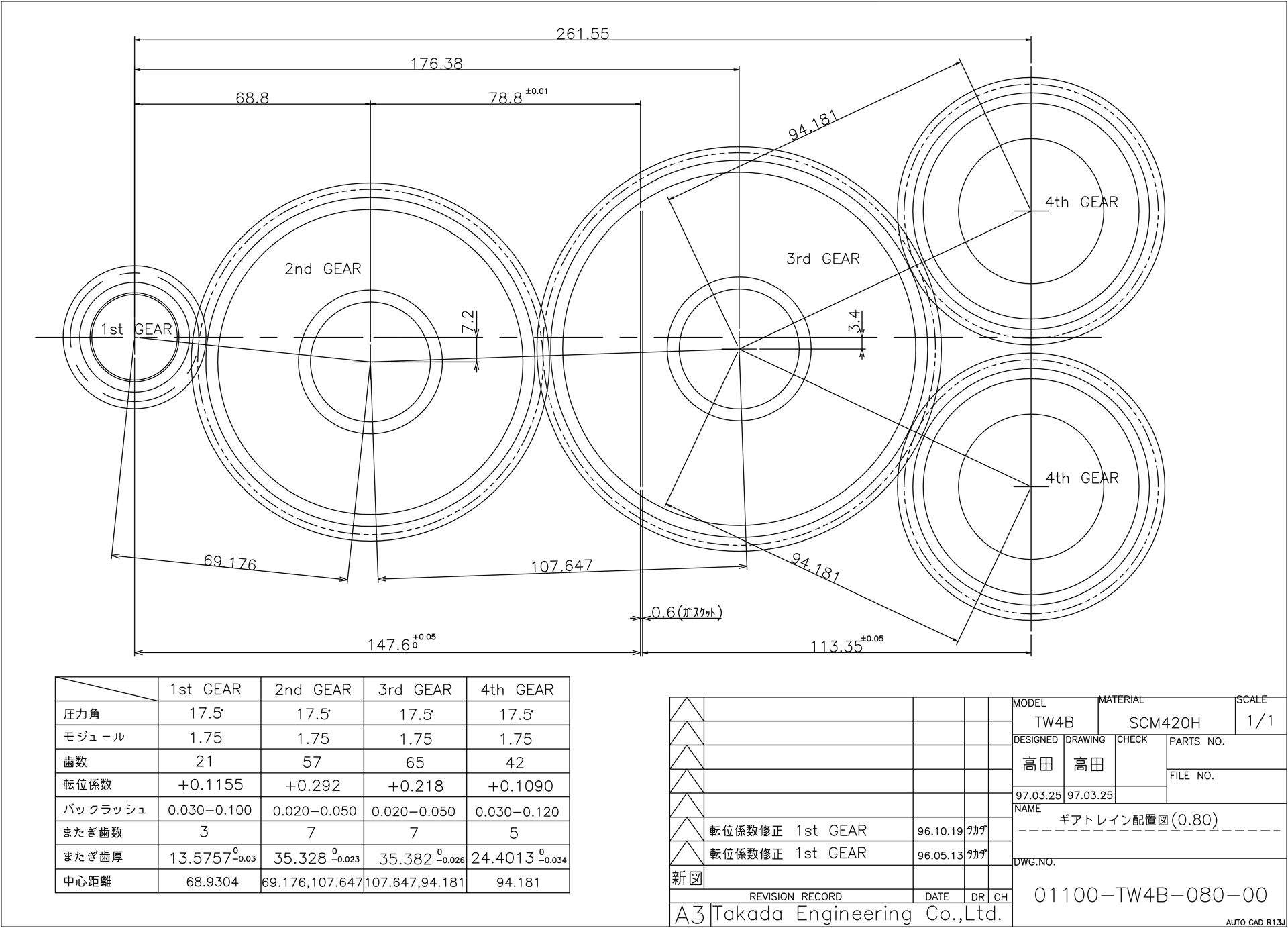
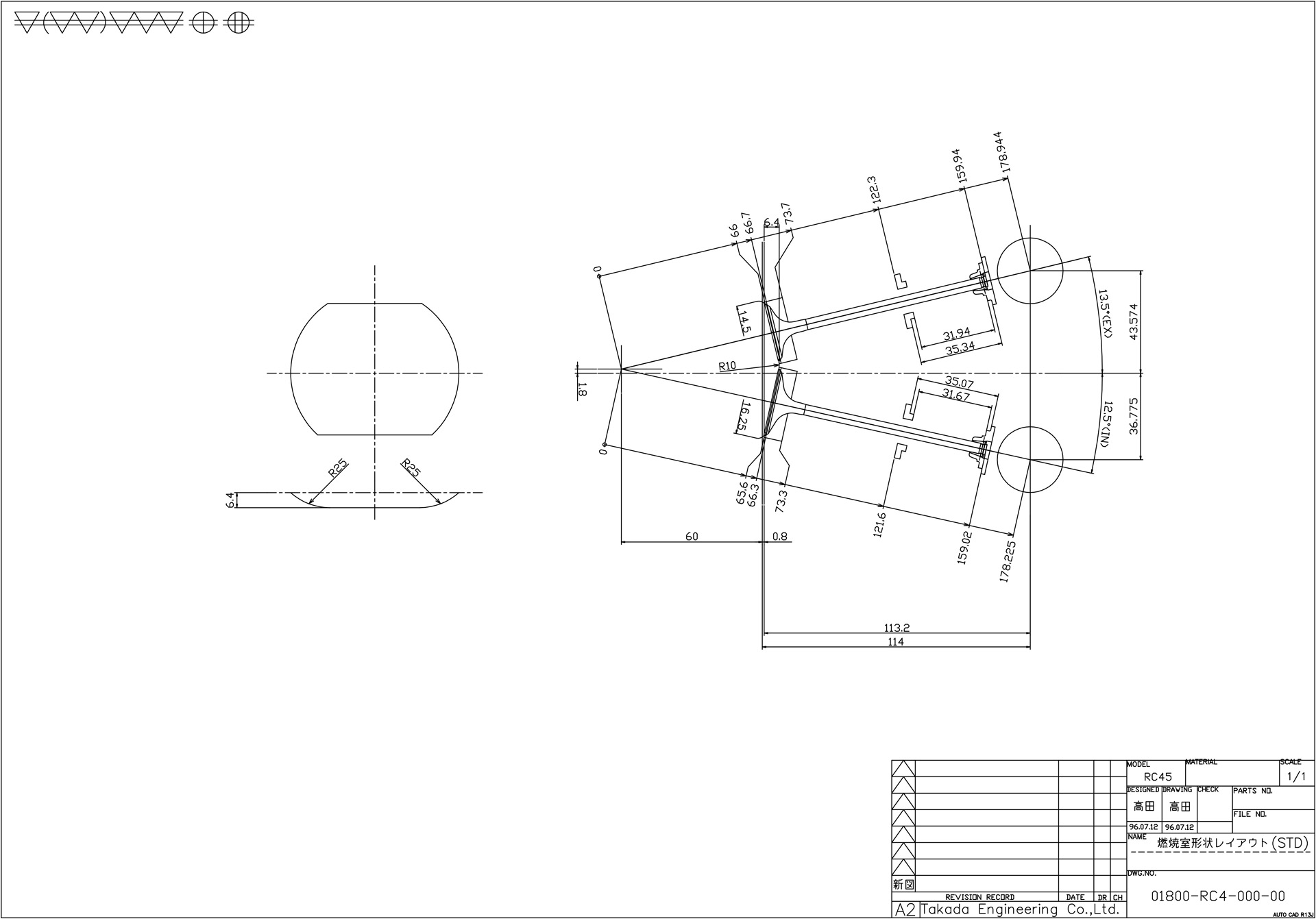
バルブ配置図と ギャトレイン歯車設計図
圧縮比を上げるのと ホンダのエンジンが凄く回るのはギャトレインにあり 図面はRC45ですが 15,000rpm までしっかり回ります。
パワーバンドは 10,000〜15,000rpm 特に12,000〜15,000rpm までは凄く大変です💦
リヤサスペンションをワークスの使っているバルブ{Aバルブ)に変えないとボトムしてウィリーしまくります。
Valve layout diagram and gear train design. The reason Honda engines rev
so well is because of the gear train. The diagram is for an RC45, but it
revs up to 15,000 rpm. The power band is 10,000-15,000 rpm, and it's especially
difficult from 12,000-15,000 rpm. If you don't change the rear suspension
to the valve (A valve) used by the factory bike, it will bottom out and
wheelie a lot.
Diagrama de válvulas e projeto da transmissão. O motivo pelo qual os motores
Honda atingem rotações tão altas é devido à transmissão. O diagrama é para
uma RC45, mas ela atinge 15.000 rpm. A faixa de potência ideal fica entre
10.000 e 15.000 rpm, sendo especialmente difícil de controlar entre 12.000
e 15.000 rpm. Se você não trocar a suspensão traseira pela válvula (válvula
A) usada na moto de fábrica, ela vai bater no fim do curso e empinar com
frequência.
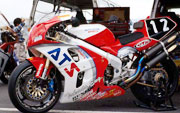
ピットロード出て行く時に10,000rpm超えると 30度くらいウィリーします。
細かな、事は また、ね😊 あっ、バルブのフェース角度は45°ですね、
シートは46°でつまりバルブの当たり幅は0.5mmとかで無く線なんです
そして、バルブコンパウンドで当たりを付けてはいけない パワーが落ちます😱
詳しくは別途説明します。
When I exit the pit lane, if the engine speed exceeds 10,000 rpm, the car
will do a 30-degree wheelie. I'll explain the details later. 😊 Oh, the
valve face angle is 45°, and the seat is 46°, so the valve contact width
is a line, not 0.5mm or so. And don't add contact with the valve compound,
or you'll lose power. 😱 I'll explain the details separately.
Ao sair dos boxes, se a rotação do motor ultrapassar 10.000 rpm, o carro
empinará em um ângulo de 30 graus. Explicarei os detalhes mais tarde. 😊
Ah, o ângulo da face da válvula é de 45° e o da sede é de 46°, então a
largura de contato da válvula é uma linha, não 0,5 mm ou algo assim. E
não adicione contato com o composto da válvula, ou você perderá potência.
😱 Explicarei os detalhes separadamente.